 by Jayne Cravens
More resources at coyotecommunications.com &
coyoteboard.com (same web site)
What a Small Town Online Campaign
Against Misinformation Can Look Like
I'm offering this case study
because I was a part of the online community where this attempt
at a misinformation campaign was started, and I want to show
that ANY community, in ANY country, is vulnerable to such
myth-spreading:
In June 2017, an image was
posted to a very popular Facebook group that targeted an Oregon
small town in particular. The image claimed to be by a woman who
had been to a local grocery store in the town and who, while in
the parking lot, was accosted by strangers who wanted to buy her
baby. A number of things in the claim and image made the online
community skeptical:
- There was an image that was supposedly of the
woman being accosted, taken from across the street. But who
took the photo! Also, there are no security cameras aimed from
across the street at that parking lot.
- The woman claimed to have parked at another
business and walked to the grocery store, carrying an
eight-month-old infant. It was a scorching hot day and the
businesses are .4 miles apart.
Below is the fake meme, which
I've tried to watermark throughout with tags to show that it's
fake, in case someone tries to share it as a real warning. It's
followed by a selection of screen captures of posts made by
moderators and members of the group, and these illustrate how
the Facebook group members immediately began trying to debunk
the misinformation, as well as a selection of responses from
people willing to believe the story. Then come screen captures
of posts by members of the city's police department to show how
they were trying to respond and debunk the rumors. The last post
is by a police representative who is originally from the town
where this event supposedly happened, who had built strong ties
to the community over the years through proactive outreach (he
invited me for coffee soon after I moved here), and who was a
very trusted community member - all of his trust-building paid
off, because as you see very early on, someone tags him to make
sure he is seeing the thread, and once he posted his response
(last screen capture), the controversy quickly died
down. It's an illustration of what I try to say in my long list
of recommendations
on addressing folklore, rumors and urban myths - it's why
most of my recommendations are about the community
trust-building that needs to happen BEFORE any event like this
takes place.
In the screen captures, I have
masked the names of all people posting except for myself and the
representatives of the police department - however, note that I
have not masked the name of the city and, as this all from a
Facebook group, the information is public: anyone with a
Facebook group could find this information, with no filters,
online. I don't want to embarrass anyone who believed the meme
before it was thoroughly debunked, however, everyone who posts
to Facebook should remember that what they post is, virtually
speaking, forever and easily found online.
In case the thread or the group is ever erased, I also have the
entire conversation, uncensored, in a PDF and am willing to
share it with academic researchers regarding projects related to
addressing online rumors / misinformation.
If you have a sight impairment and are doing academic research
and need these images transcribed for your research, please
contact me and I will be happy to help you.
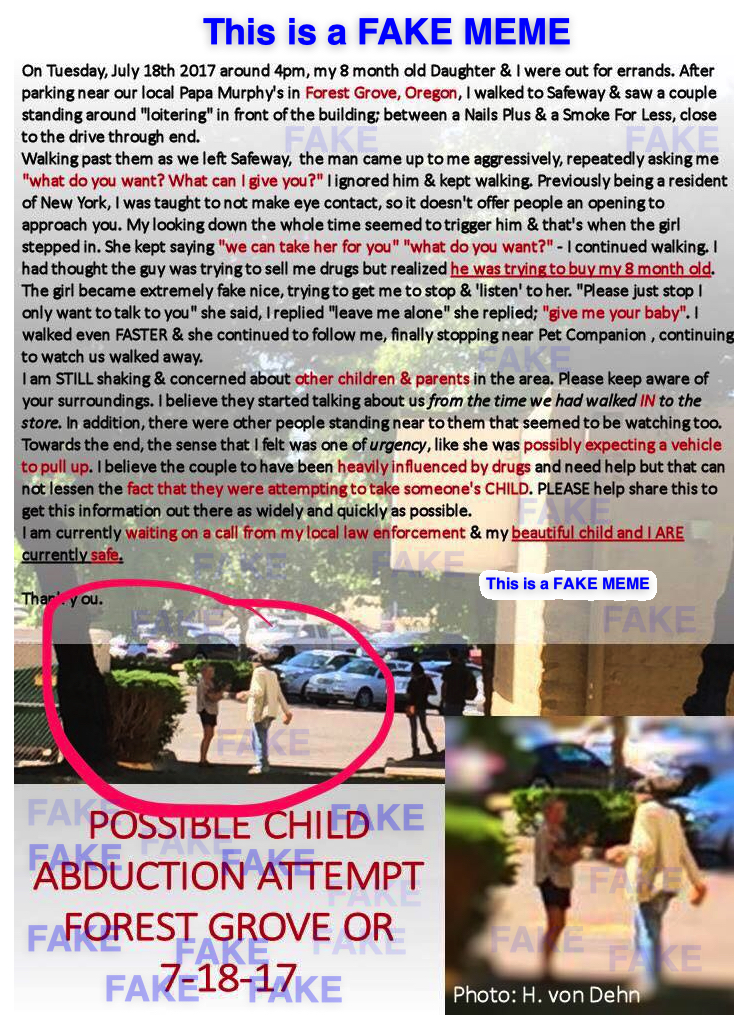
Intro post
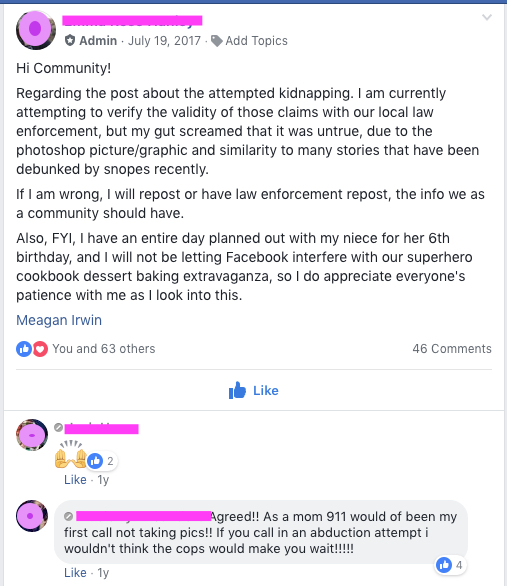
Selection 1
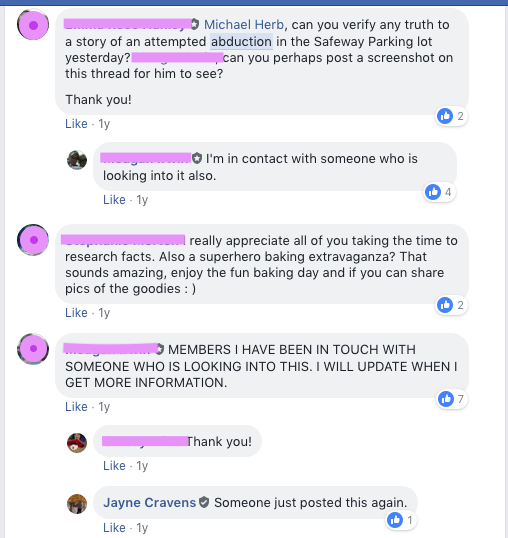
Selection 2
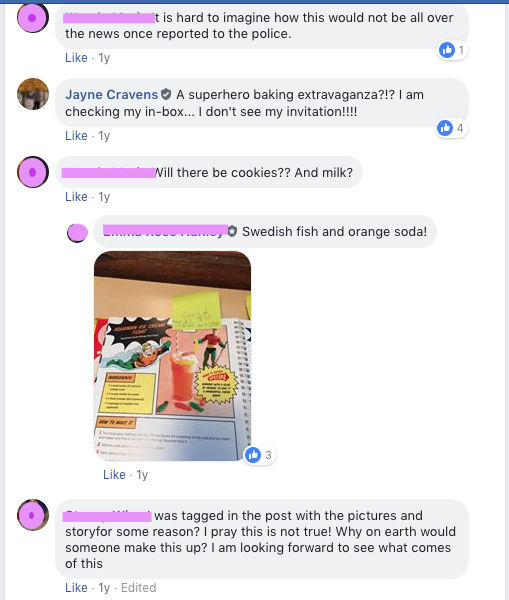
Selection 3
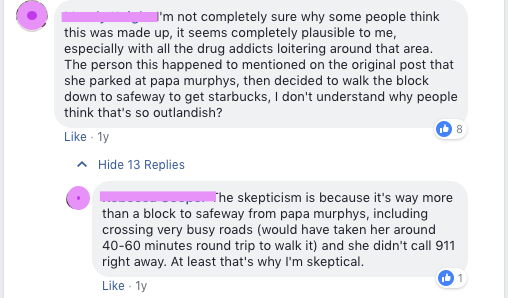
Selection 4
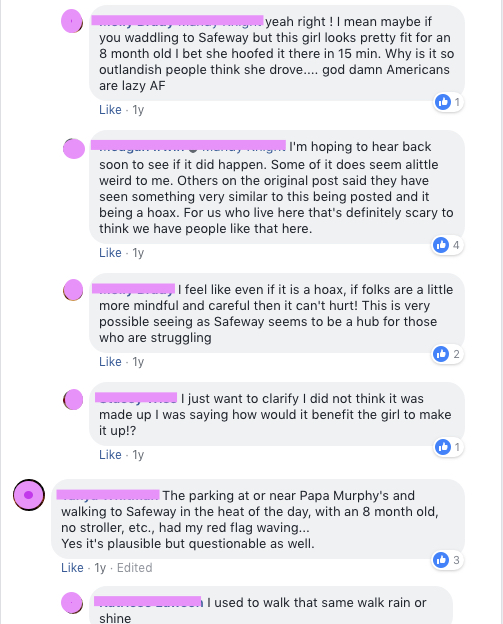
Response from the police 1
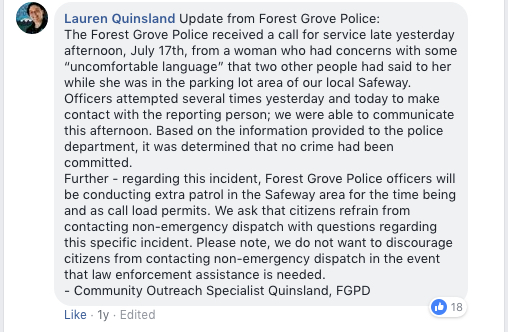
Response from the police 2
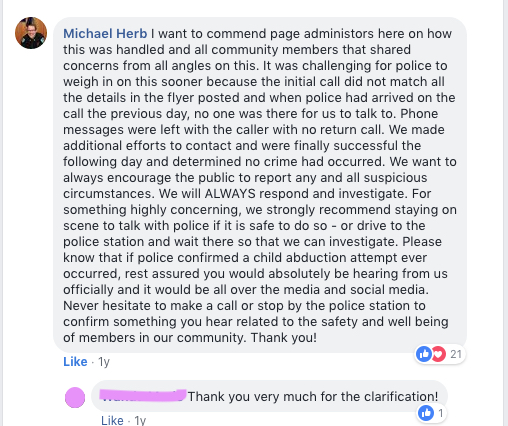
Since 2004, I have been gathering and sharing examples of widespread
misunderstanding and myth-spreading interfering with relief and
development activities, and government initiatives, including
public health initiatives -- even bringing such to a grinding
halt. I also have extensive list
of recommendations on preventing folklore, rumors and
urban myths from interfering with development and aid/relief
efforts and government initiatives.
Also see Factors
for Success for a Neighborhood or Town-Based Online Community
and Launching &
Maintaining a Successful Online Community for a Neighborhood,
Town, City or County
Back to my humanitarian aid and
development resources main page
Discuss
this
web page, or comment on it, here.
Quick Links
 my home page
my consulting services
& my workshops &
presentations
my credentials & expertise
Affirmation that this web site is
created & managed by a human.
My book: The Last Virtual Volunteering
Guidebook
contact me or see my schedule
Free Resources: Community Outreach, With & Without
Tech
 Free Resources:
Engaging & Supporting
Volunteers
Free Resources:
Engaging & Supporting
Volunteers
Free Resources: Technology Tips for Non-Techies
Free Resources: Nonprofit, NGO & other
mission-based management resources
Free Resources: Web Development, Maintenance,
Marketing for non-Web designers
Free Resources: Corporate philanthropy / social
responsibility programs
Free Resources: For people & groups that want
to volunteer
linking to or from my web site
The Coyote Helps Foundation
me on social media (follow
me, like me, put me in a circle, subscribe to my newsletter)
 how to support my work
To know when I have developed a new
resource related to the above subjects, found a great
resource by someone else, published
a
new blog, uploaded a new
video,
or to when & where I'm training or presenting, use any
of the following social media apps to follow me on any of
these social media platforms:






Disclaimer: No guarantee of accuracy or
suitability is made by the poster/distributor of the materials
on this web site.
The information provided on this website is for general
informational purposes only and should not be considered legal
advice.
I am not a lawyer. I am not a legal professional. Do any
information on this site as legal counsel.
I am not responsible for any losses, damages, or liabilities
that may result from the use of this website or reliance on its
content.
Your use of this website and its information is at your own
discretion and risk.
This material is provided as is, with no expressed or implied
warranty or liability.
See my web site's privacy
policy.
Permission is granted to copy, present and/or distribute a limited
amount of material from my web site without charge if
the information is kept intact and without alteration, and is
credited to:

Otherwise, please contact me
for permission to reprint, present or distribute these materials
(for instance, in a class or book or online event for which you
intend to charge).
The art work and material on
this site was created and is copyrighted 1996-2026
by Jayne Cravens, all rights reserved
(unless noted otherwise, or the art comes from a link to
another web site).